
Watching the real work
12 video calls with the two internal roles that touch a candidate and the partners who hire them. Ops shared their screen and ran real tasks while I timed each one.
HowdyB2B Marketplace2023 – 2026
A dual redesign, internal tools for the Ops team and the partner-facing app, built around a single business goal: getting more candidates hired and working actively with partners.
At a glance
01The problem
The goal was to double active placements, from 300 to 600 Howdy Players, but profiles, matching and hiring were slow and manual, spread across tools, email and calls.
02What I did
As the only designer, I redesigned both sides of the funnel: AI-assisted profiles and matching for Ops, one Opportunity Workspace, and In-App Hiring for partners.
03The result
Hiring moved into the product, from the first match to the signed contract, with AI taking the first pass on profiles and matching.
Howdy connects Latin American tech talent with US companies, and the whole business rolls up into one number: Howdy Players, candidates hired by a partner and actively working on their team. When I joined, the goal was 300. The target became 600.
Getting there meant improving both sides of the same funnel: the internal tools the Ops team uses to build and present candidates, and the app partners use to request and hire them. AI became one of the biggest levers.



Interviews with every internal role touching a candidate showed where the friction actually lived. On the partner side, once a candidate was requested, the hiring pipeline had almost no visibility in the app.
Problem type
Stakeholders
Constraints
Methods
Every internal role touching a candidate, plus partners, to find where each process actually broke down.
Profile creation, matching, sending recommendations and the full hiring pipeline, documented end to end.
AI-assisted profiles, AI Matching, the Opportunity Workspace and In-App Hiring, reviewed with the teams that would use them.
Internal and partner changes shipped on separate tracks, so Ops didn't wait on partner-side legal and contract review.
12 video calls with the two internal roles that touch a candidate and the partners who hire them. Ops shared their screen and ran real tasks while I timed each one.
The friction, in their words, grouped by role.
Every task was timed live during the screen-shares and averaged across sessions: every change now had a number to beat.
Every note went onto one board. AI helped cluster them into the three problems the redesign would solve.
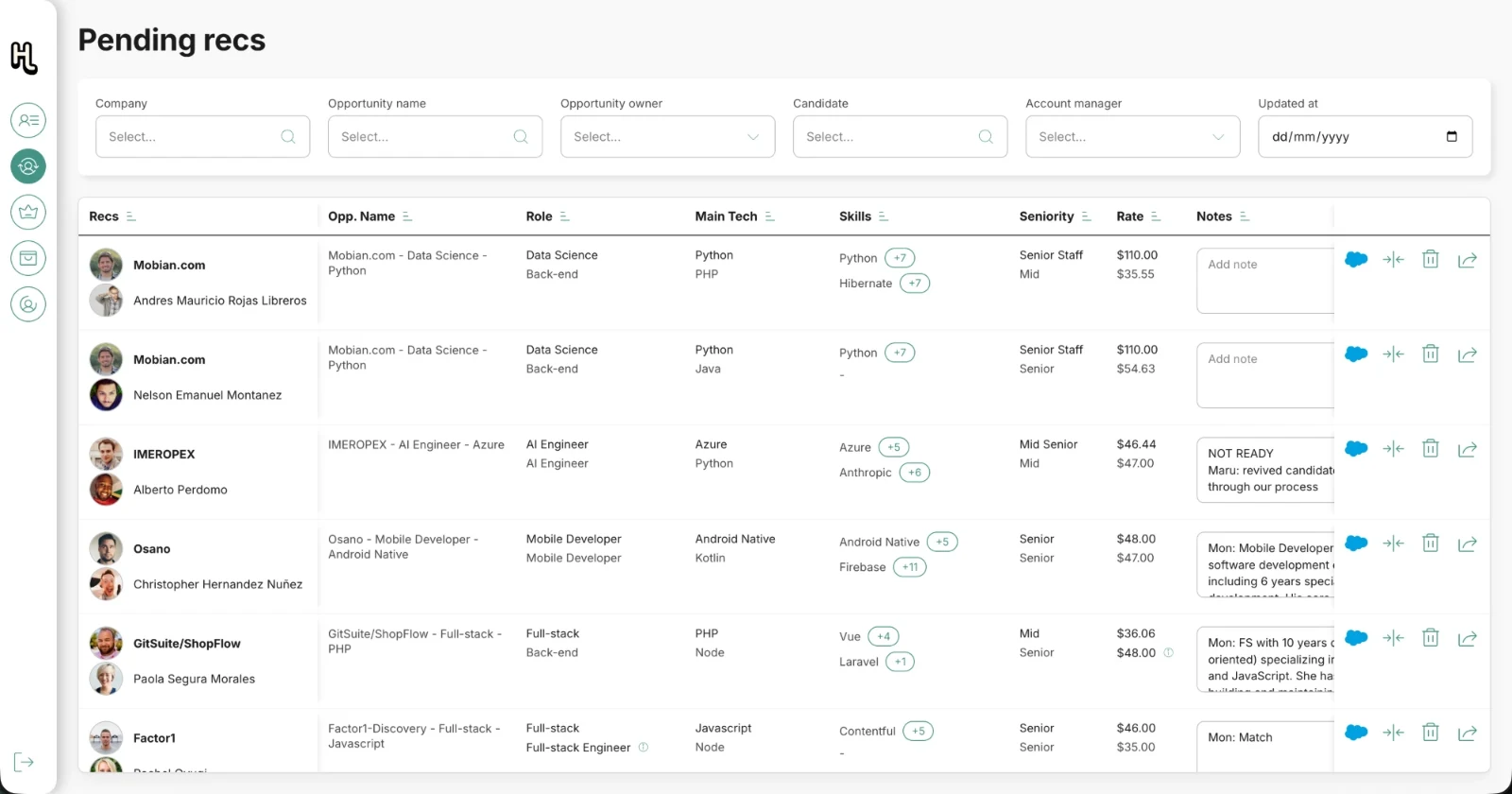
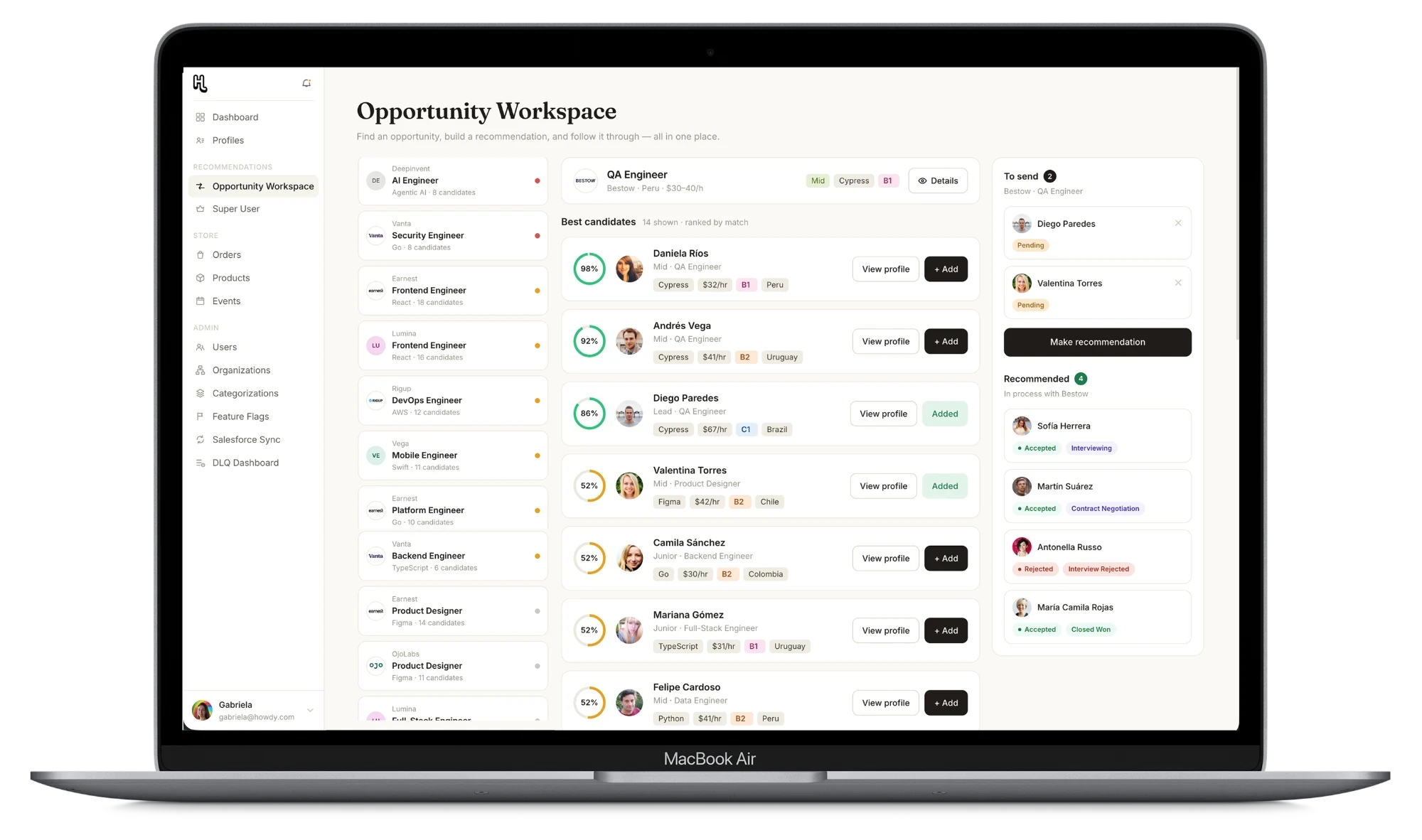
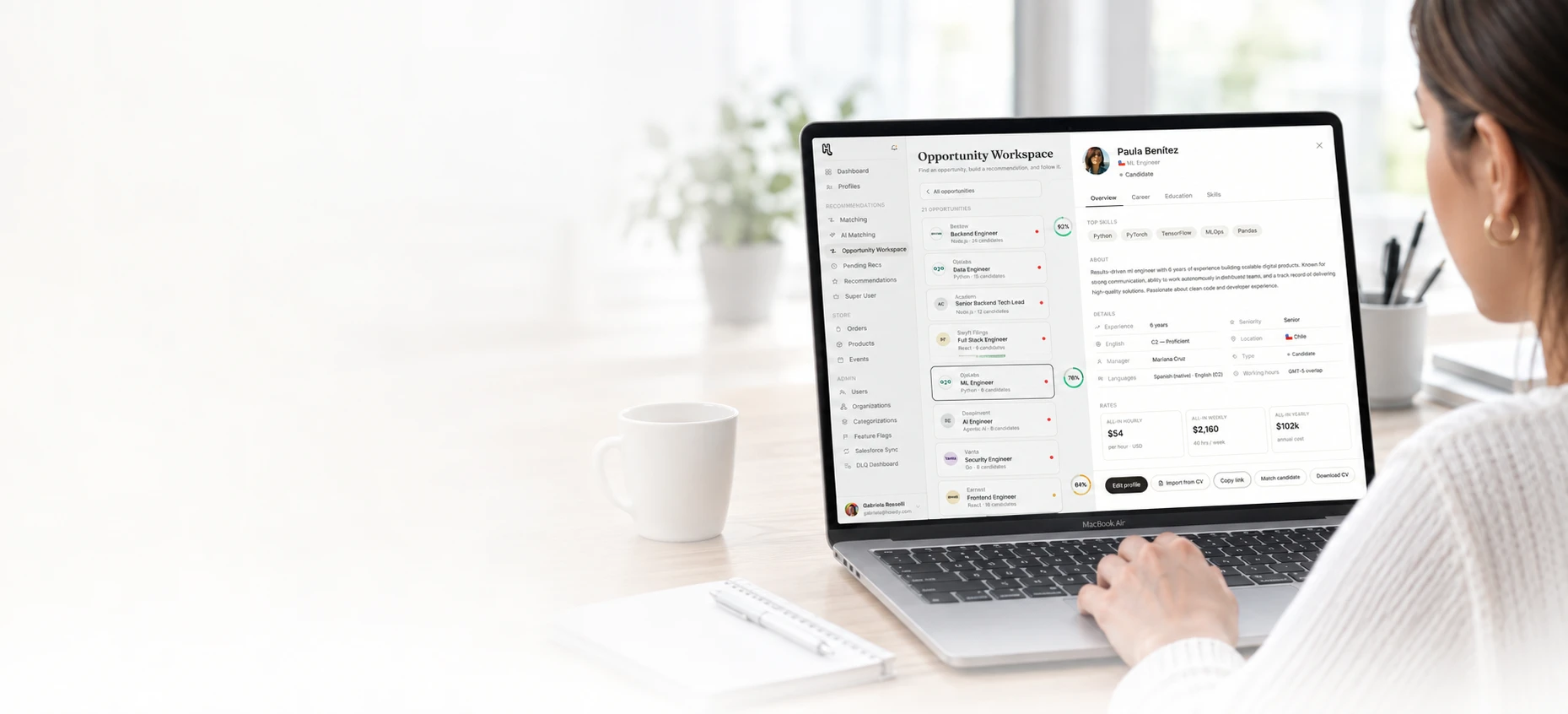
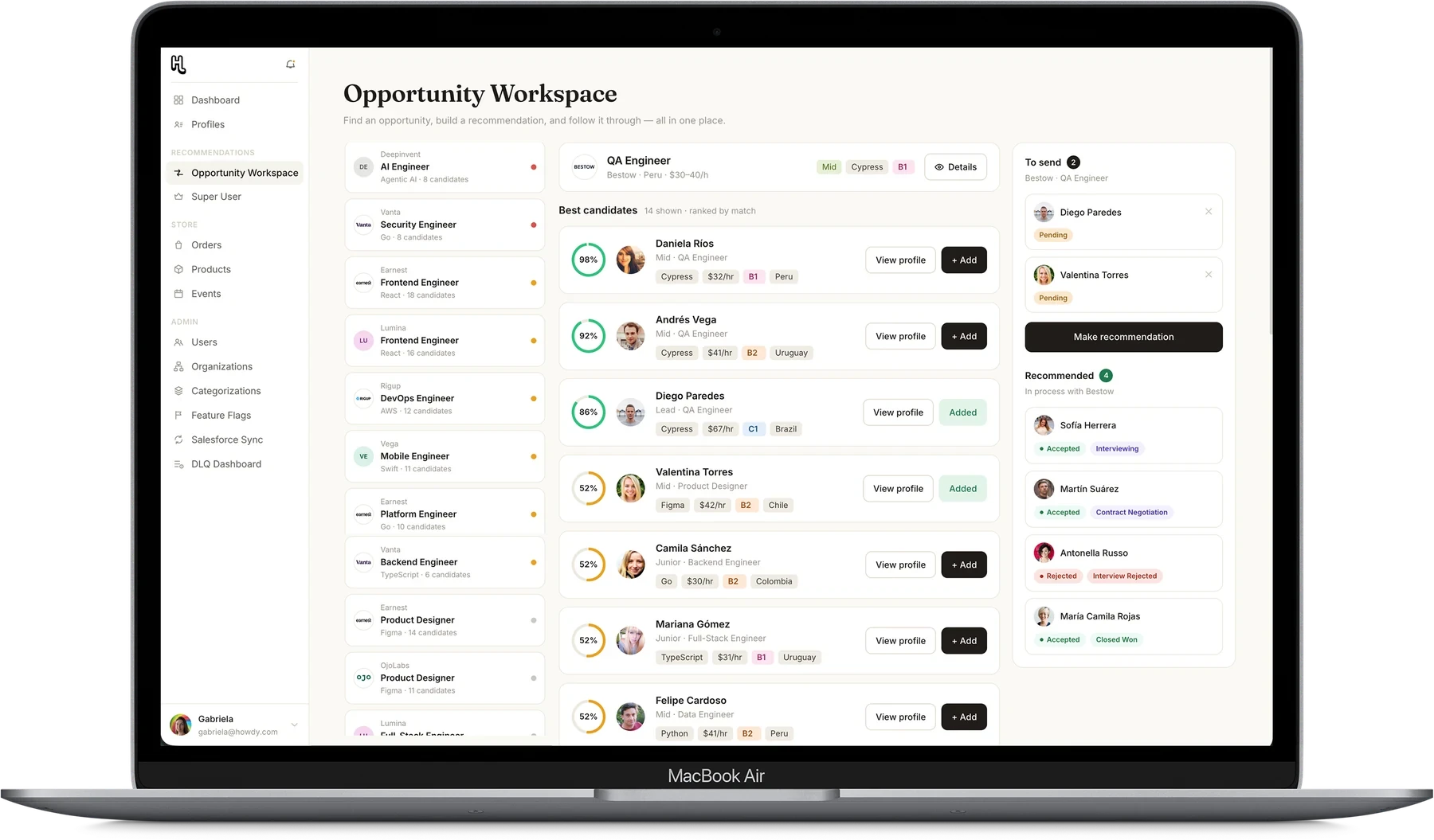
Three sections that split one job became a single Opportunity Workspace, with a dashboard to start the day.
Internal · Admin
Every change traced back to the same goal: present more candidates, faster, with less manual work in between.
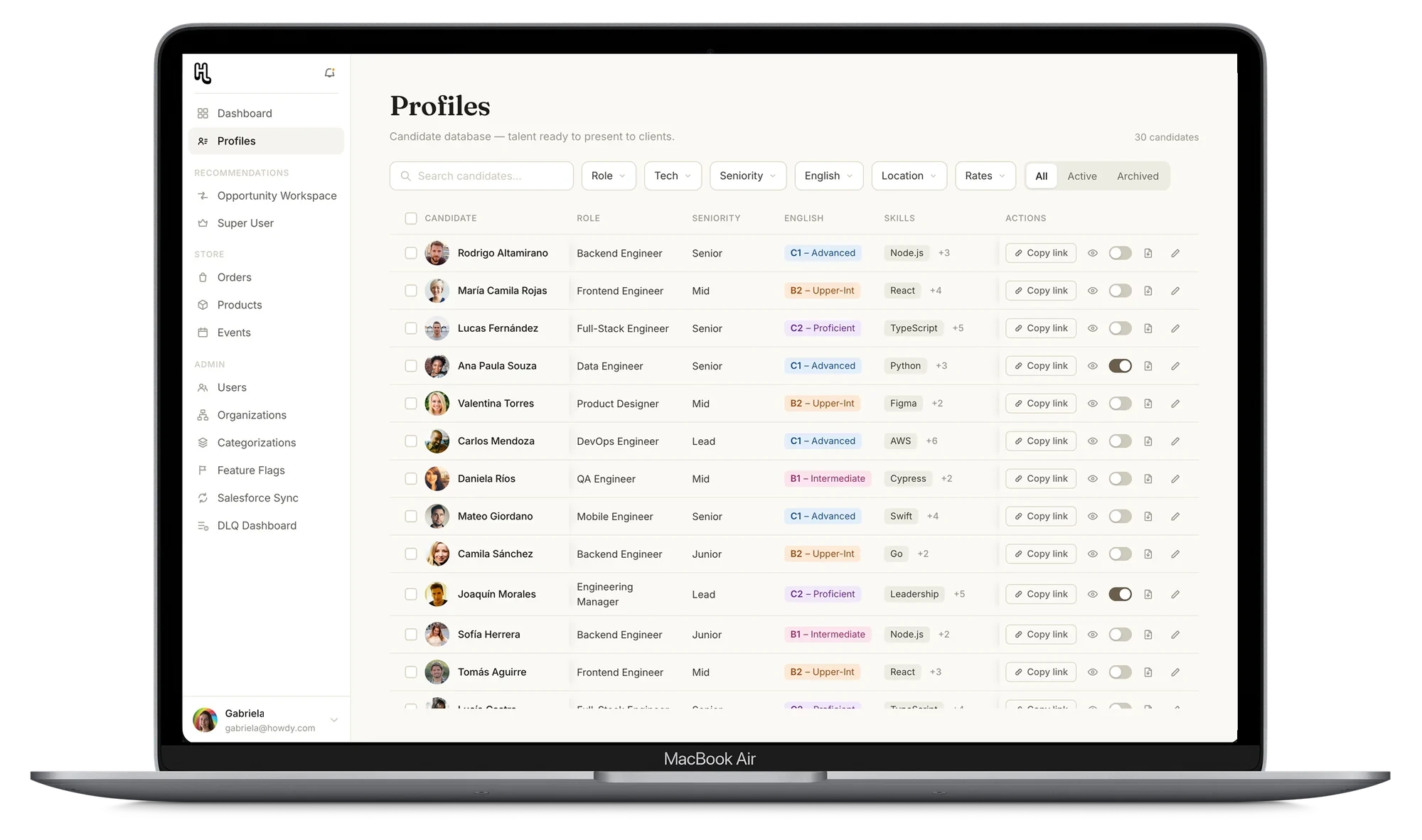
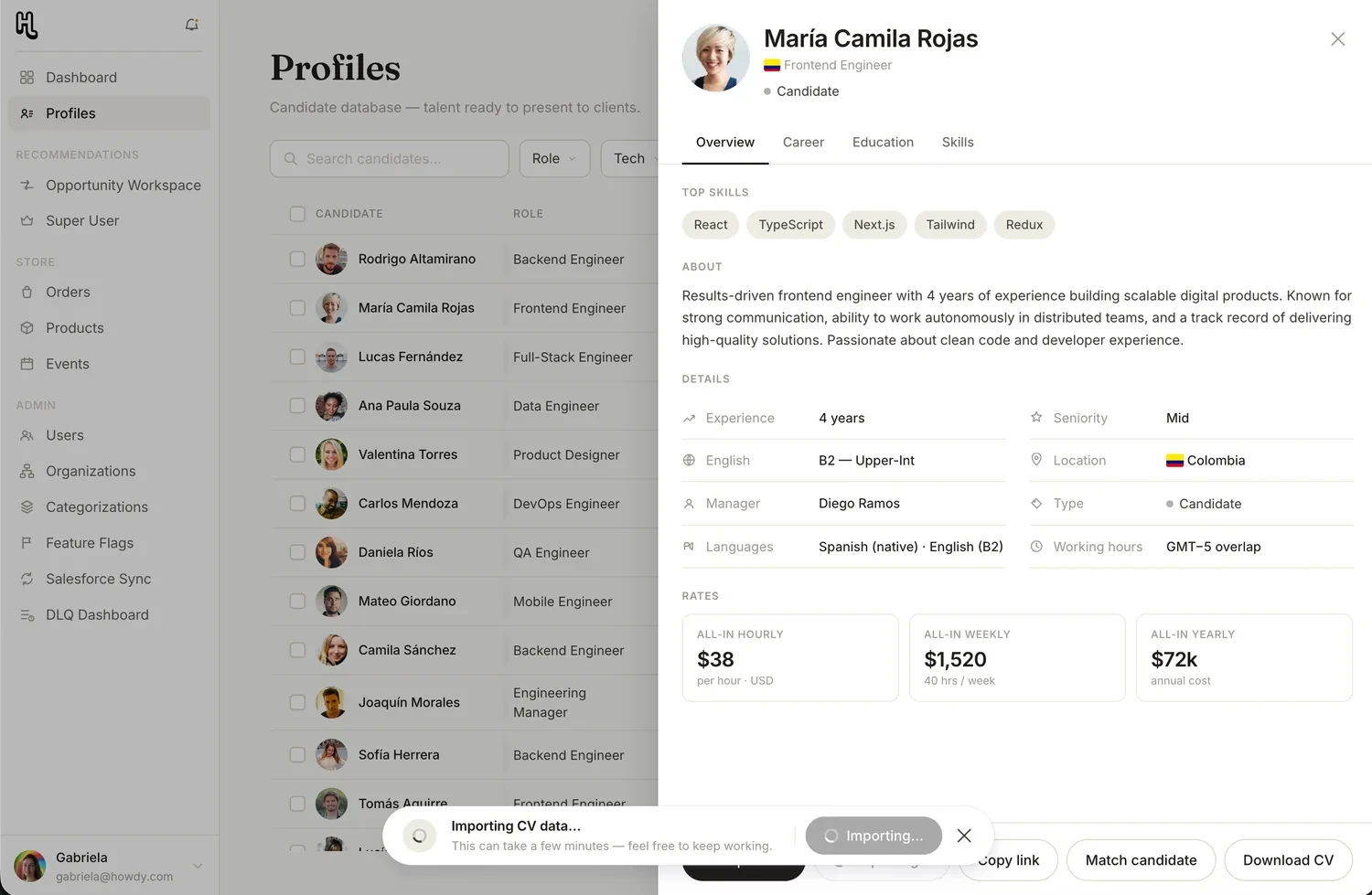
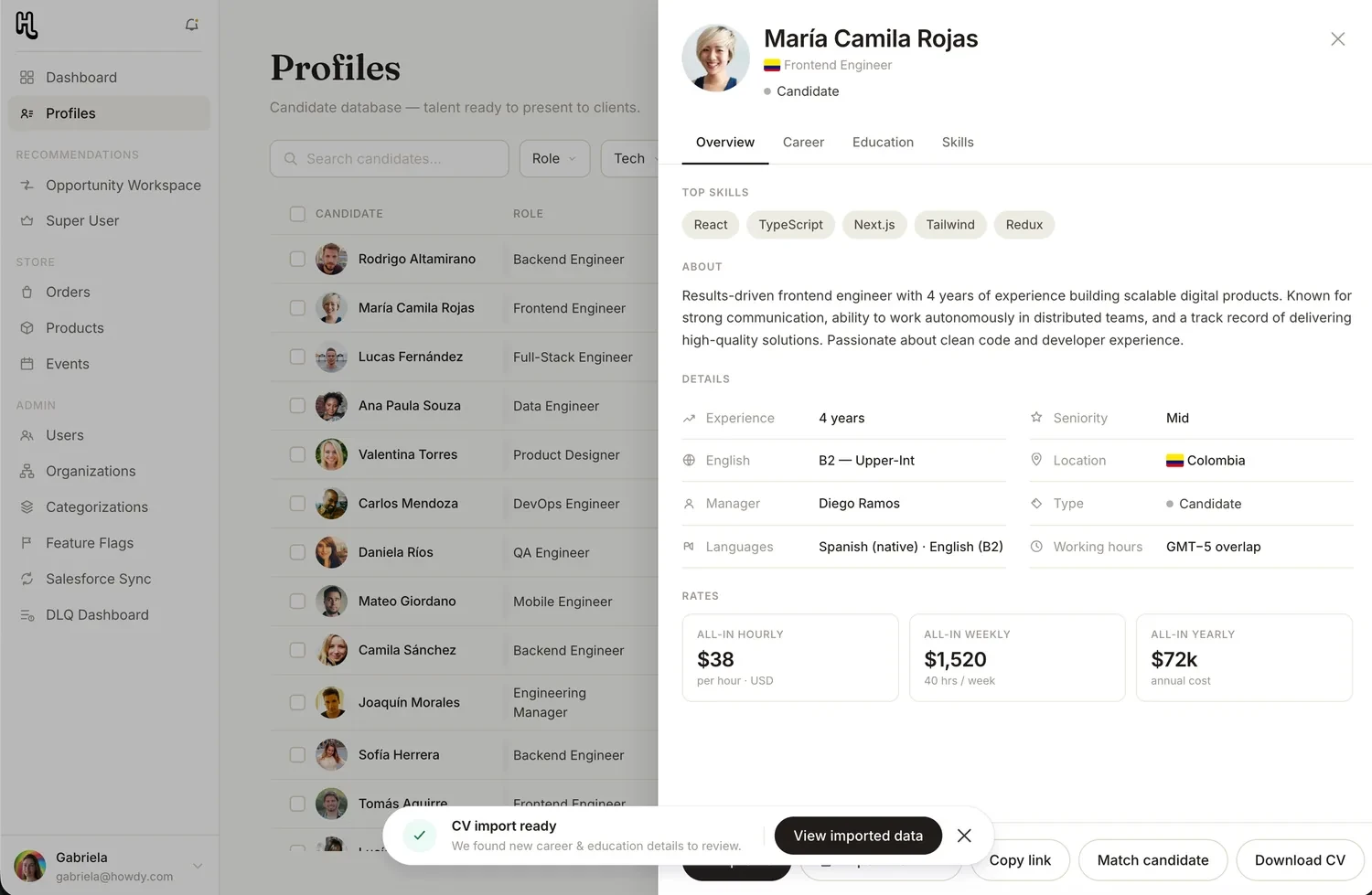
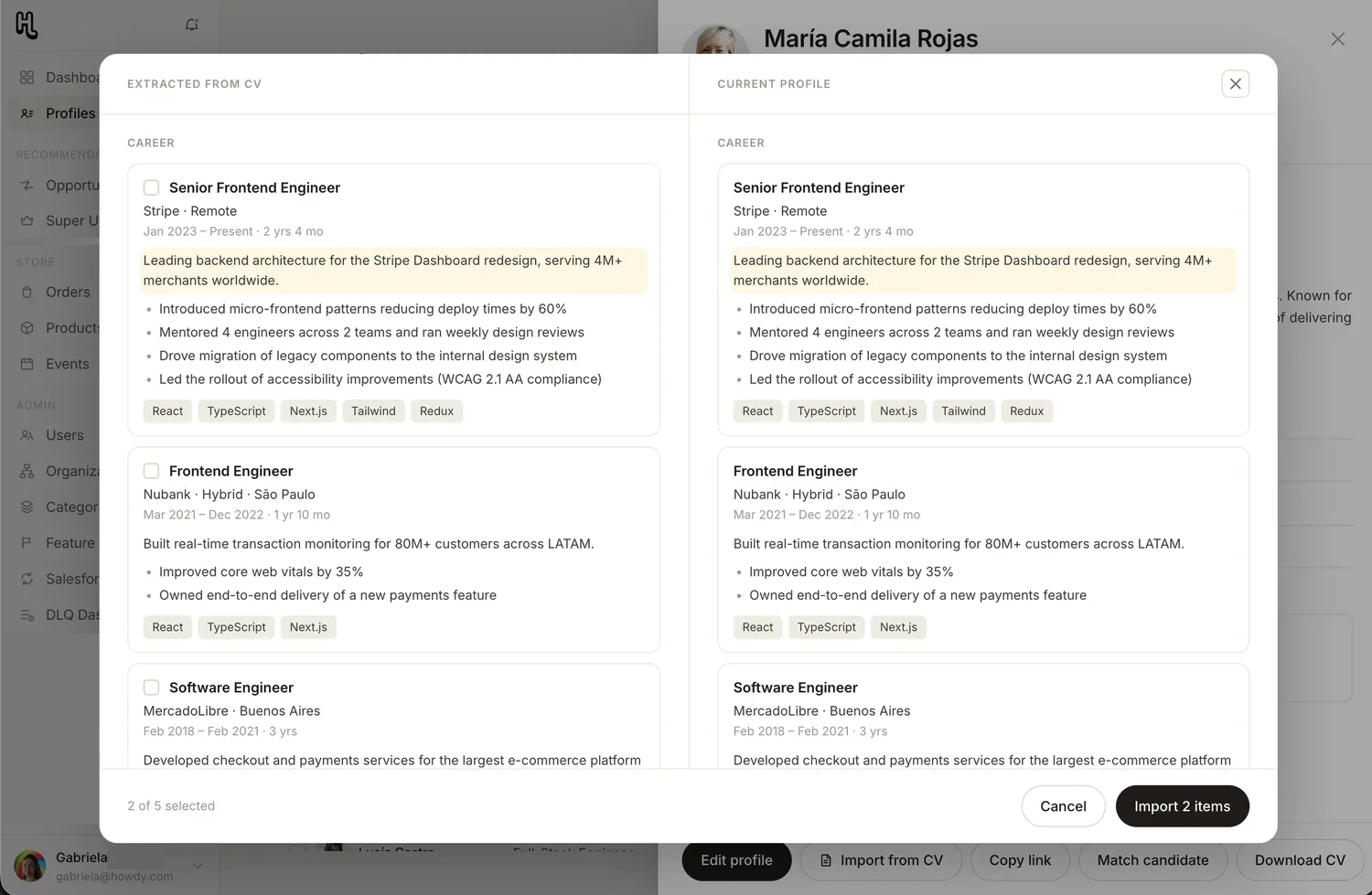
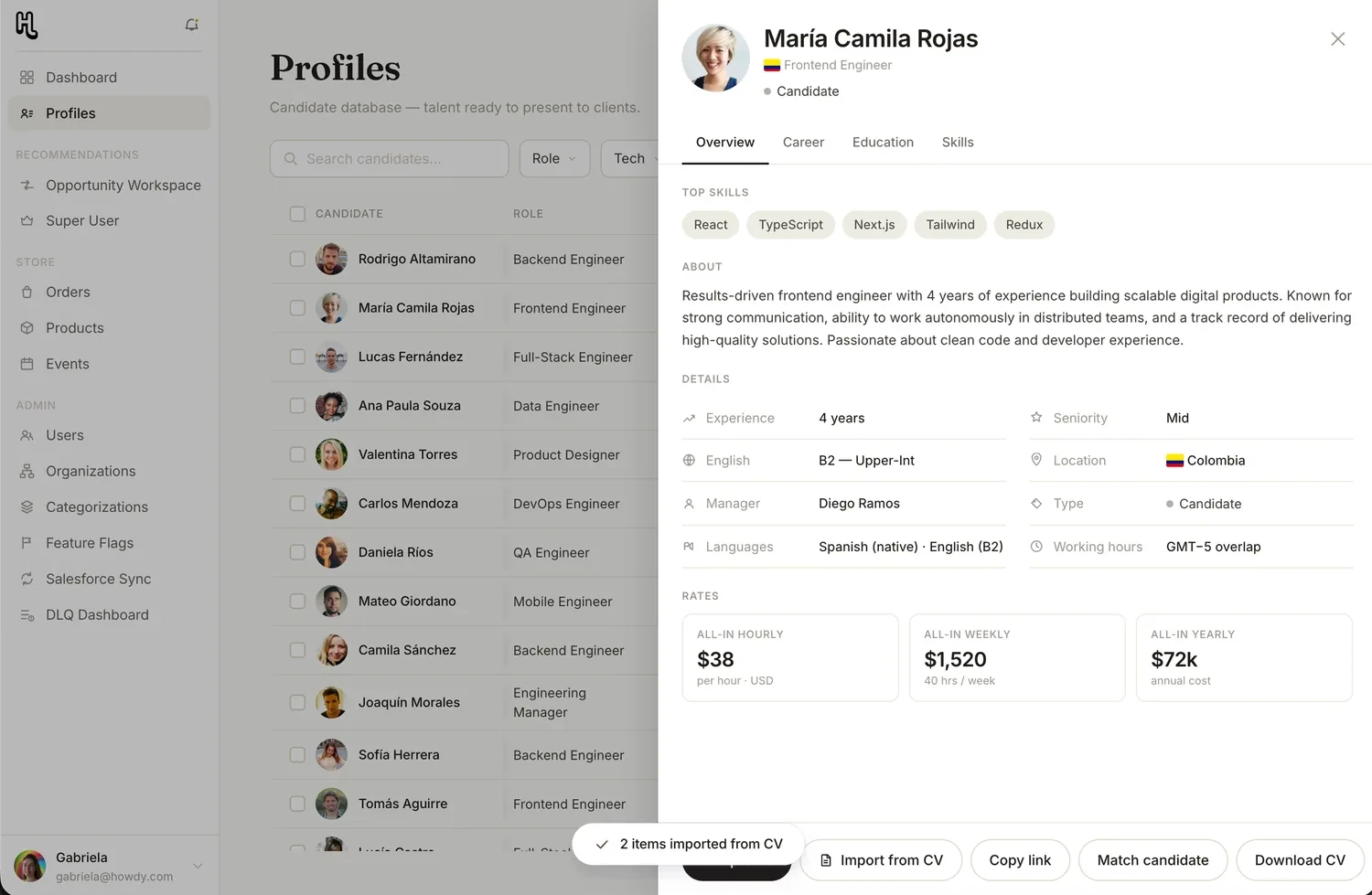
The profile fills itself from CVs, LinkedIn and interview notes. Recruiters review and confirm instead of typing.
For each partner request, every candidate is scanned and ranked from highest to lowest match.
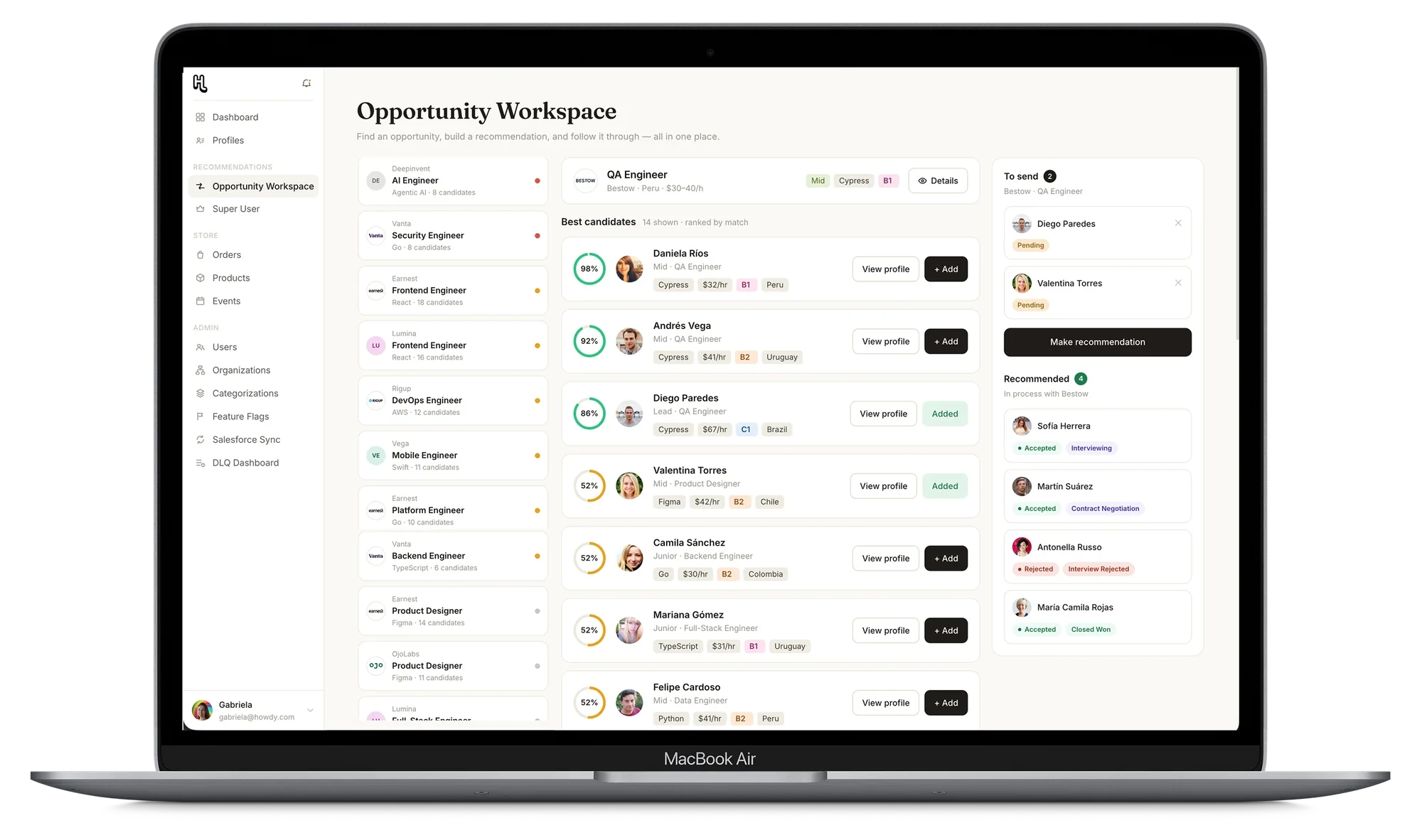
One section replaced three. Queue several matches for the same partner and send them from the same screen.
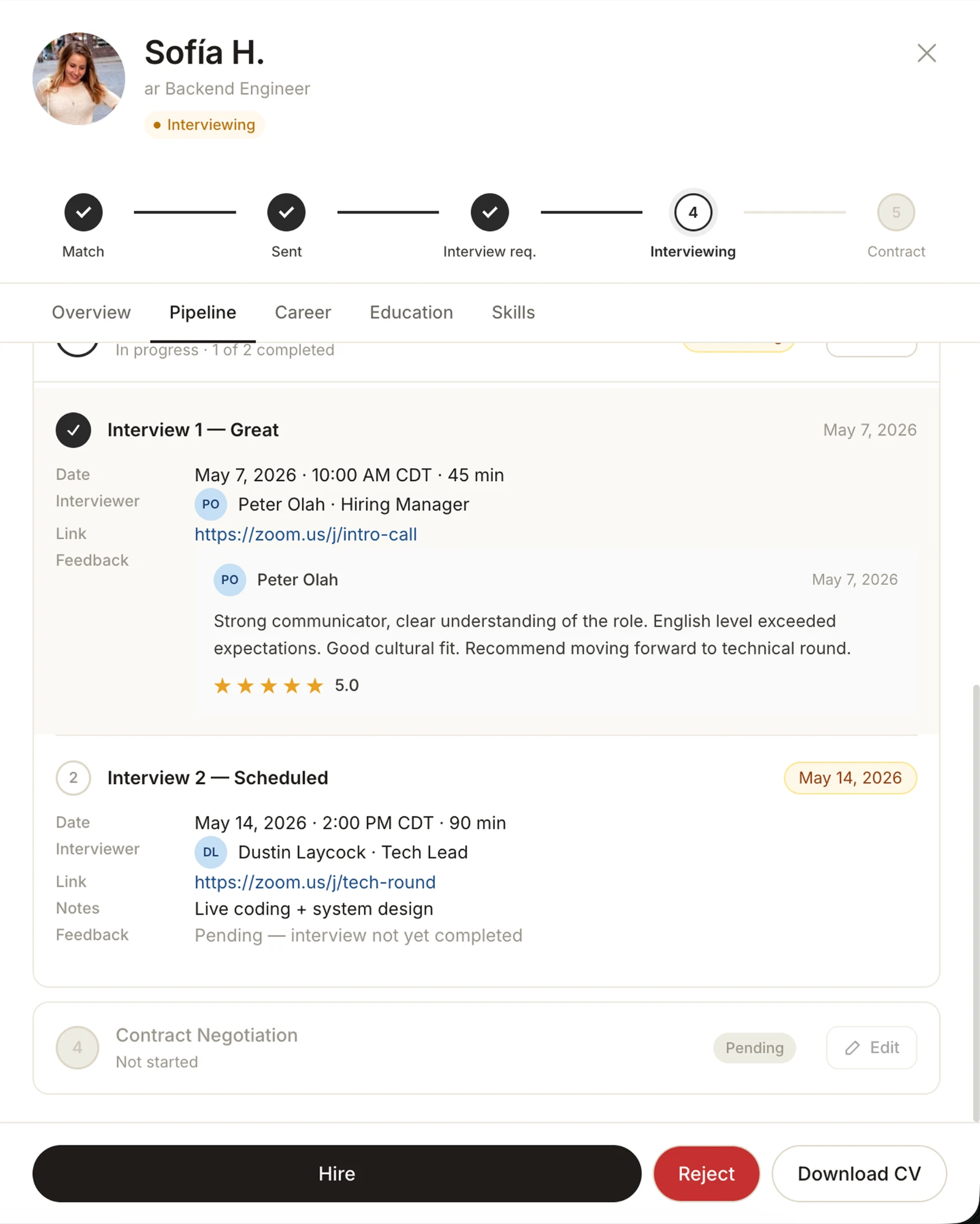
Presentation, acceptance and every interview, with dates, people and feedback, in one timeline.
External · Howdy App
Partners could already request candidates, but everything after that moved to email and calls. In-App Hiring carries the process all the way through.
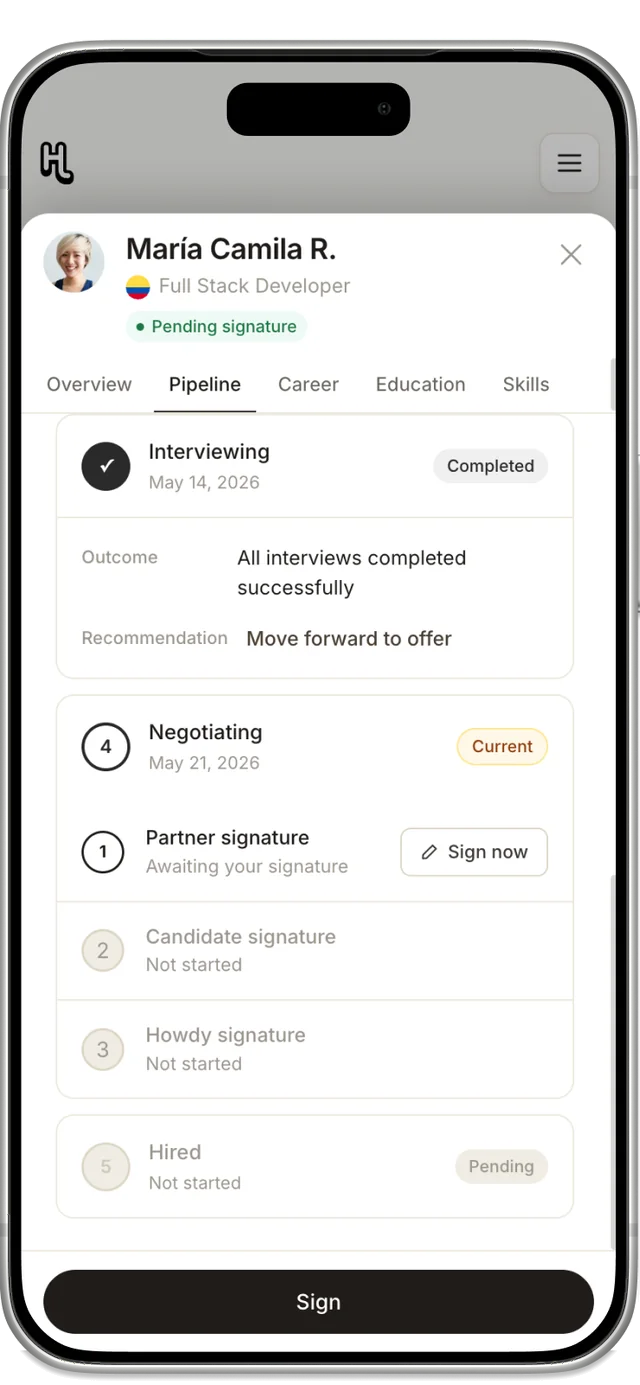
Pipeline
Partners track every interview stage and what is waiting on them, without asking for a status update.
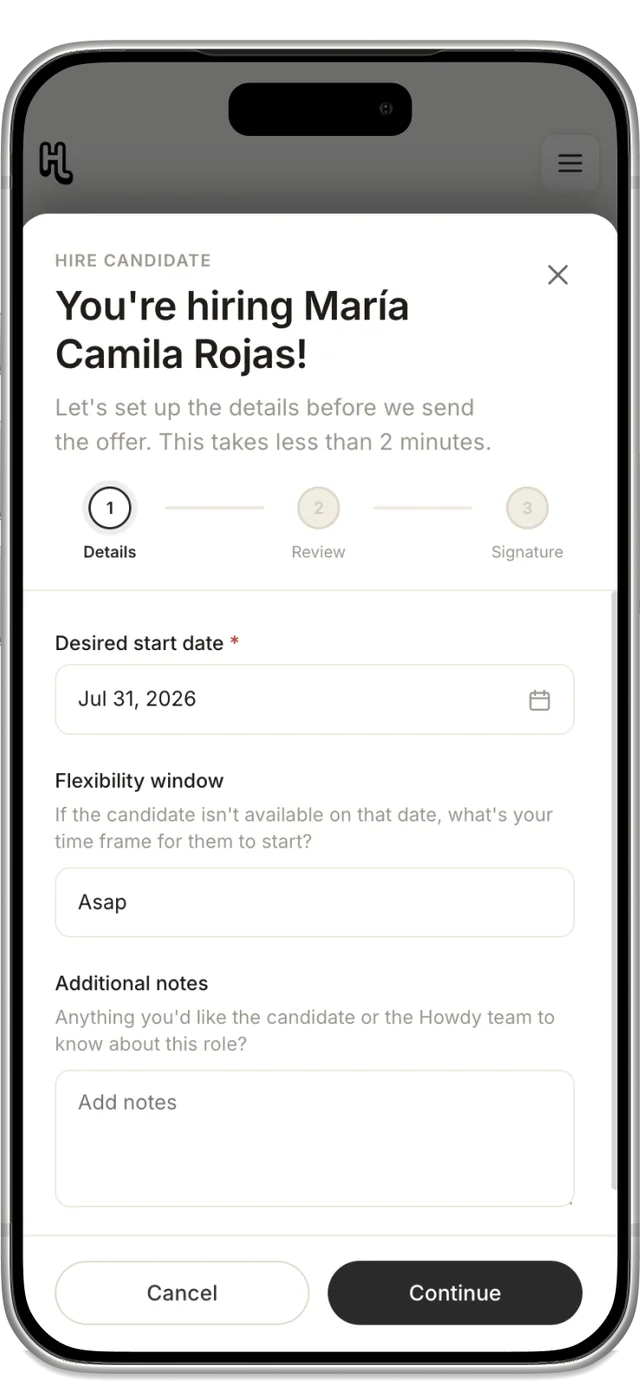
Review details
Start date, flexibility window and notes for the candidate or the Howdy team, in under two minutes.

Review cost
The total weekly cost and its breakdown, with the professional, role and start date, before anything is sent.
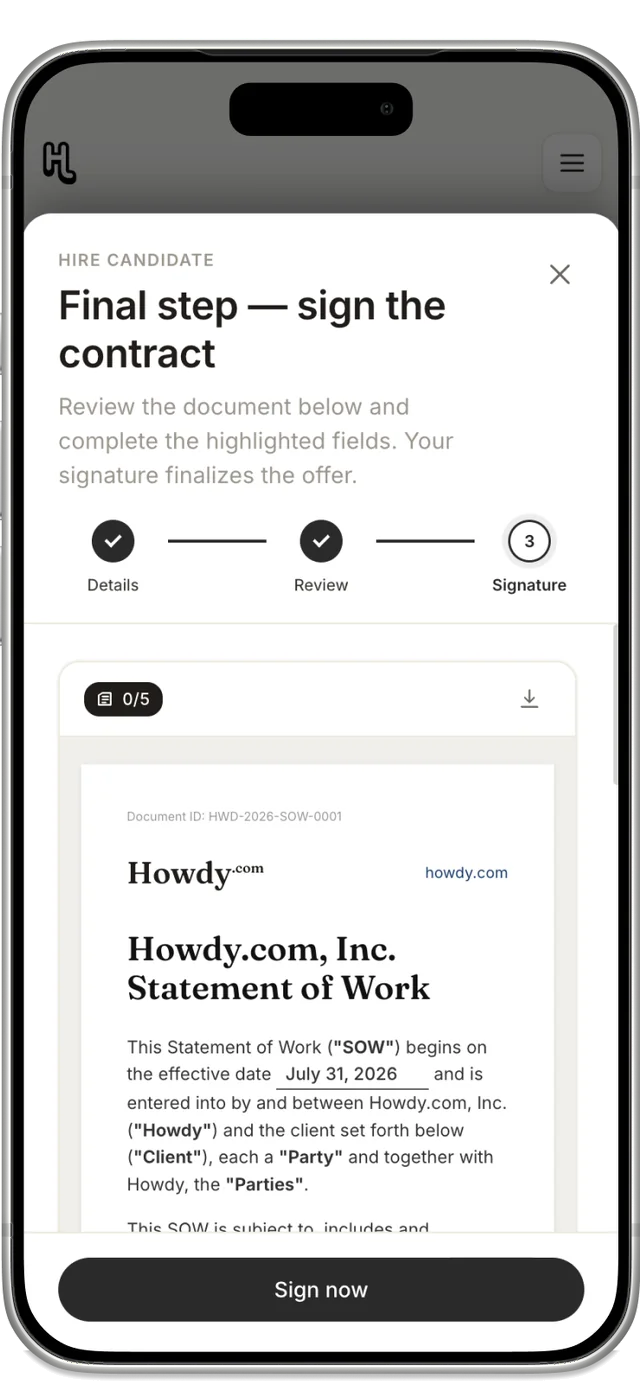
Sign the contract
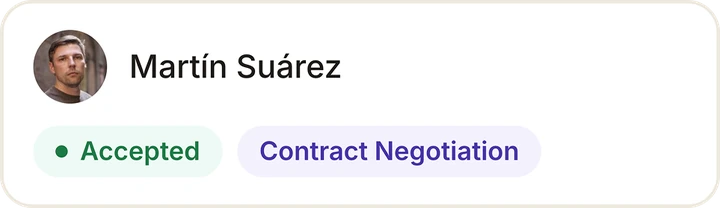
The contract is signed online, then waits on Howdy and the candidate.
~95% of hiring steps now happen in the appBuilt to help scale placements from
300 → 600
Howdy Players working with partners, the company goal
Time to generate a ranked match list for an opportunity
Cut Account Manager time per hire
−35%
with far less back-and-forth
Grew weekly active partners
+45%
after In-App Hiring shipped
Recruiters now present
3×
more candidates per week
| Metric These figures are illustrative, modeled on Ops and partner activity over the redesign period rather than exact reported numbers. The HP goal is the platform's overall placement target, which this work contributed to alongside sourcing, sales and account growth, not a number this redesign alone produced. | Before | After | Change |
|---|---|---|---|
| Profile creation time, per candidate | ~50 min | ~18 min | −64% |
| Time to generate a ranked match list | ~20 min | <1 min | −95% |
| Sections needed, match to sent recommendation | 3 | 1 | −67% |
| Hiring cycle, match to signed contract | ~18 days | ~9 days | −50% |
| Hiring steps completed inside the app | ~40% | ~95% | +55 pts |
| Howdy Player placement goal | 300 HP | 600 HP | 2× |
The real outcome
Beyond the metrics, this work reframed what the Howdy App was for. Before In-App Hiring, it was a place to request candidates and then wait. Now it's where the hire actually happens, which is the difference between a tool partners check occasionally and one they depend on.
Doubling the HP goal isn't a single redesign's job. It's a target the whole company works toward, and design's role is to keep removing the friction between a good candidate and an active placement. This phase closed the biggest gaps I could see: manual profile building, one-at-a-time recommendations, and a hiring process that left the app halfway through.
What's still ahead
Feeding interview and hiring outcomes back into the ranking, and real-time alerts to Recruiters when a high-scoring match appears.
Letting partners adjust an open opportunity's requirements on their own, and nudges when a candidate is waiting on partner feedback.
Check-in flows once a Howdy Player is active, to catch churn risk earlier, with post-hire outcomes feeding the matching model.