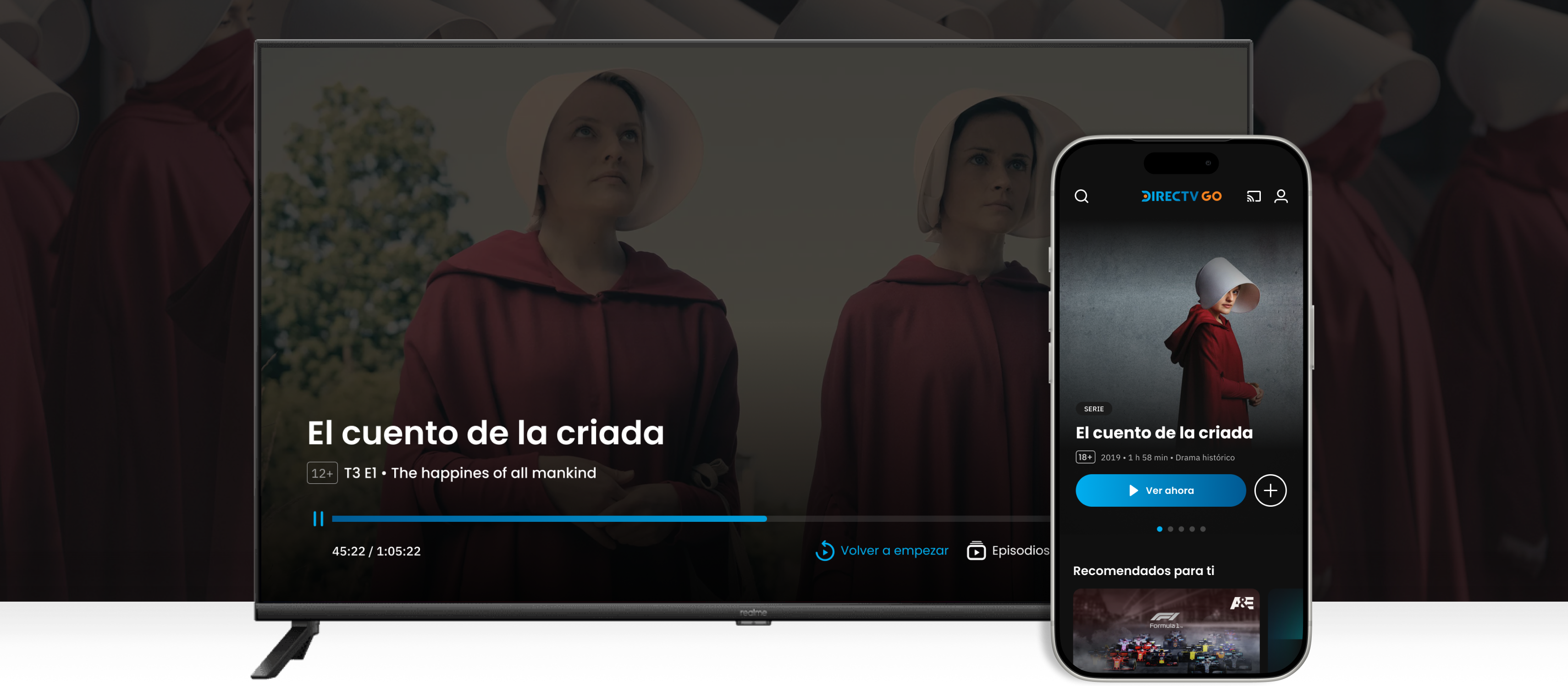
DGO had no shared design language across its three platforms, and its signature feature — live TV — forced people to leave the stream every time they wanted to check another channel. I rebuilt both: a design system from the ground up, and a live TV experience built around how people actually watch TV.
Overview
DGO is DIRECTV's streaming platform — live TV channels, exclusive sports, and thousands of on-demand movies and series, available on every device: phone, tablet, computer, Smart TV, or a compatible streaming device (Apple TV, Android TV, Roku-built-in TVs, Chromecast, or Roku streaming devices).
I joined as Product Design Lead when the product was growing fast but the design function hadn't kept pace: three designers working independently across web, mobile/tablet, and Smart TV — each solving the same problems differently, with no shared system to work from.
Problem
UI: without a well-defined design system, three designers working across web, mobile/tablet, and Smart TV each solved the same components differently. On top of that, the product itself looked dated next to competitors — still built around DIRECTV's institutional color and a font that read as technology, but old technology.
UX: live TV — the product's actual differentiator — had a broken core interaction. Watching live TV the way people actually watch it means channel surfing. Here, checking another channel meant exiting the active stream, going back to the programming grid (EPG), picking a channel, and starting over — every single time.
Three designers solving the same problem three different ways, on a product whose one advantage — live TV — punished you for doing the most natural thing a TV viewer does: change the channel.
Process
01
Started sessions with the three platform designers to align the needs and ideas each had been handling separately. That's where the idea for a new design system came from.
02
Compared DGO against similar products — competitors offering live TV streaming, like Flow, for the experience side, and cutting-edge visual patterns for the UI facelift.
03
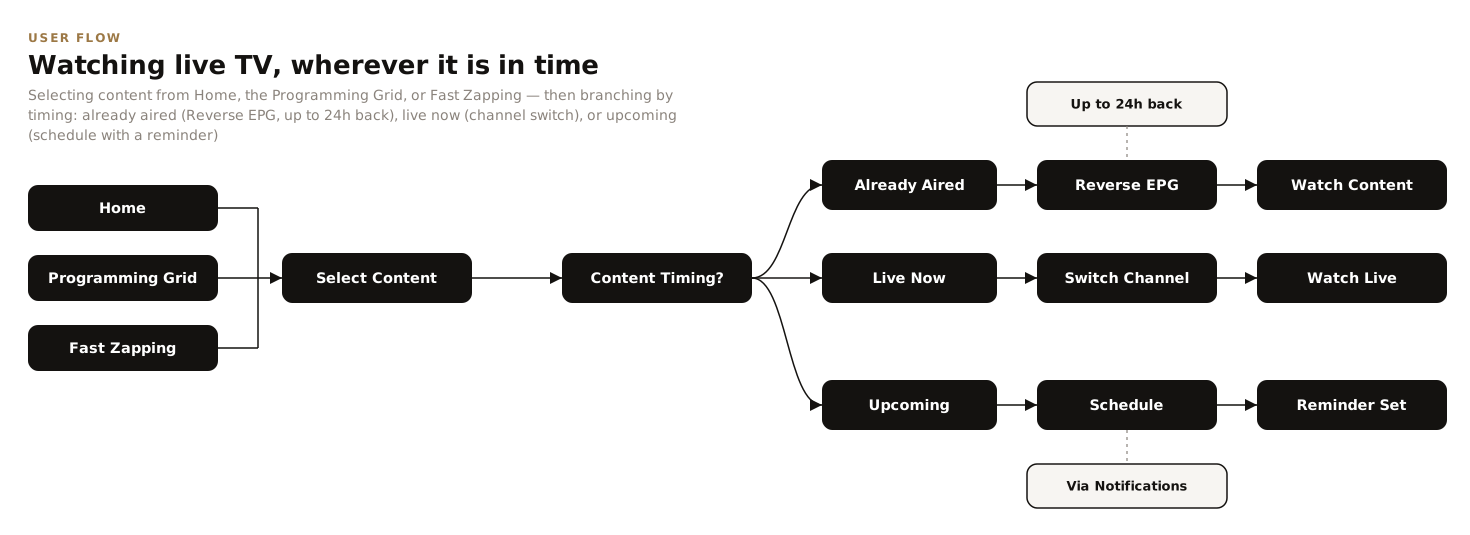
Proposed watching content happening right now, content that already aired (up to 24h back), or content still to come — schedule it for later.
04
Built the system together with the visual designers, atomic-design style — addressing the specific gaps each of them had flagged along the way.
Competitive benchmark
Streaming & live TV comparison — Latin America
| On-Demand Streaming |
Live TV Channels |
Local Sports Channels |
Exclusive Sports Rights |
Direct-to- Consumer |
Reverse EPG |
Multiple Sub. Tiers |
|
|---|---|---|---|---|---|---|---|
| DGO | |||||||
| Netflix | |||||||
| Prime Video | |||||||
| Max (HBO Max) | |||||||
| Flow | |||||||
| Disney+ | |||||||
| Paramount+ |
Benchmark against streaming competitors in Latin America — live TV, local sports, and Reverse EPG stood out as DGO's real differentiators
Solution
The fix had to work on both fronts at once — a shared visual language the three platforms could actually build on, and a live TV experience that stopped fighting the way people watch television.
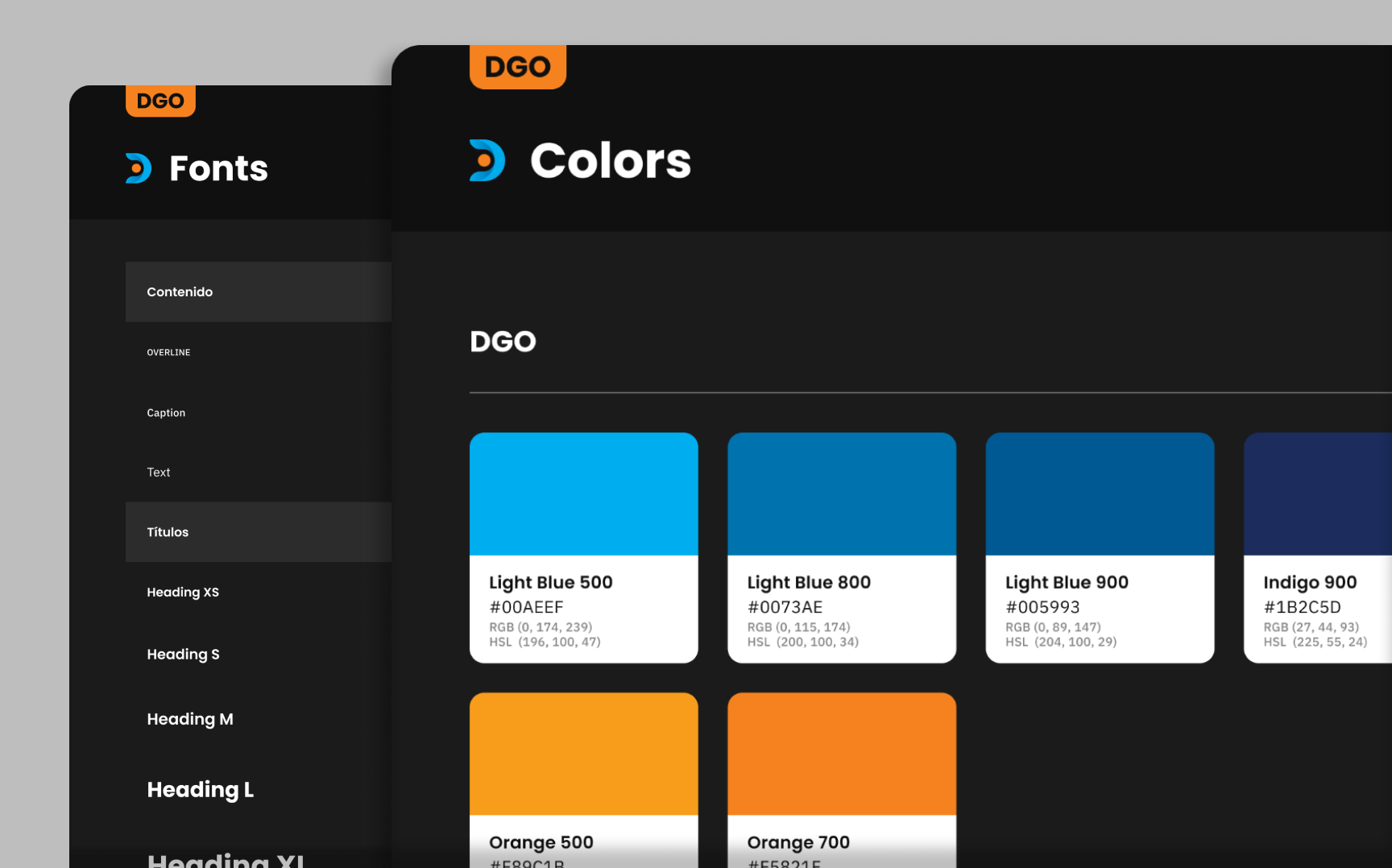
Stepped away from DIRECTV's general corporate branding — color and typography — to give DGO the character of a digital streaming product: independent from, while still part of, the DIRECTV universe. Formalized two new typefaces, one for headlines and one for body text.
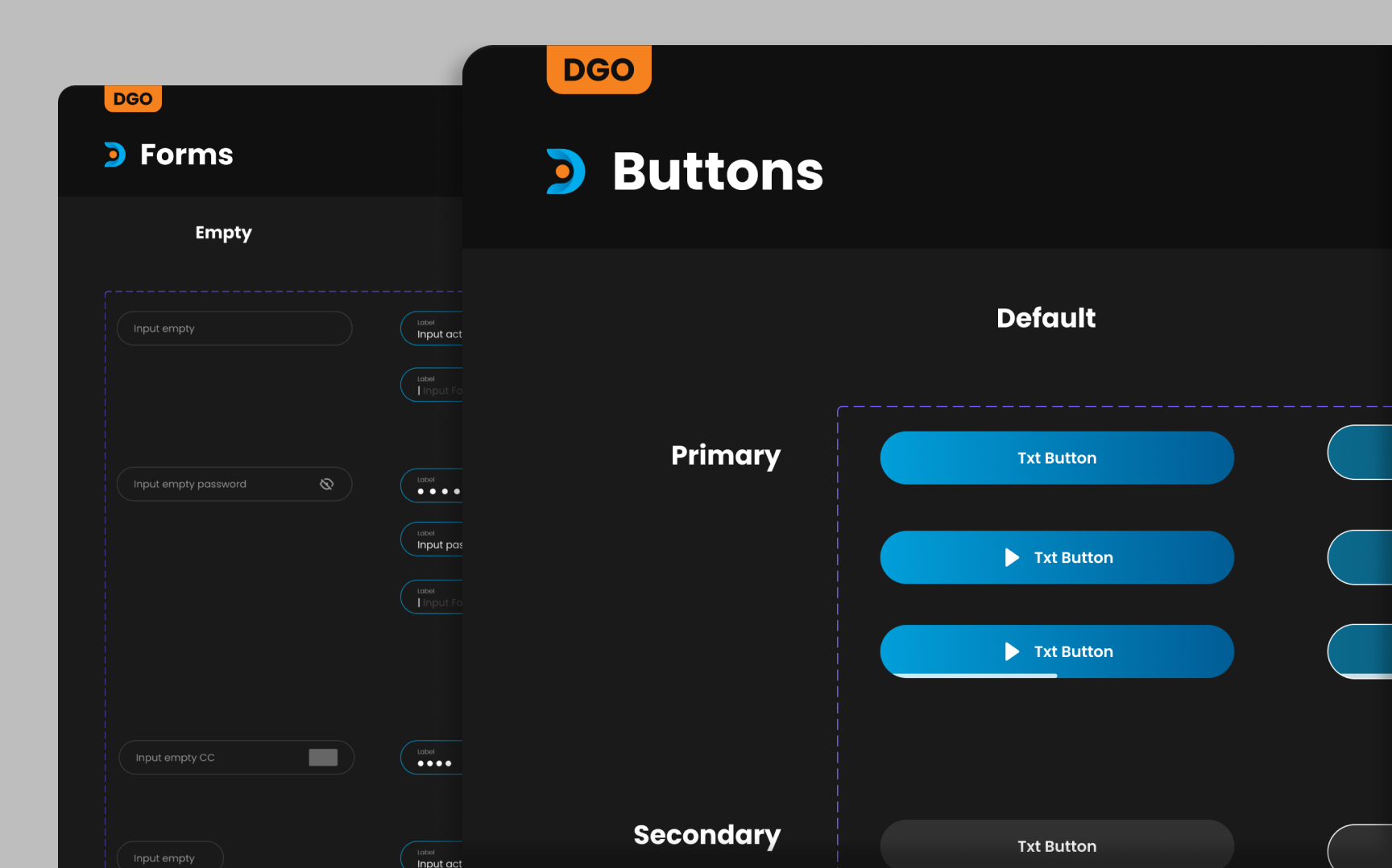
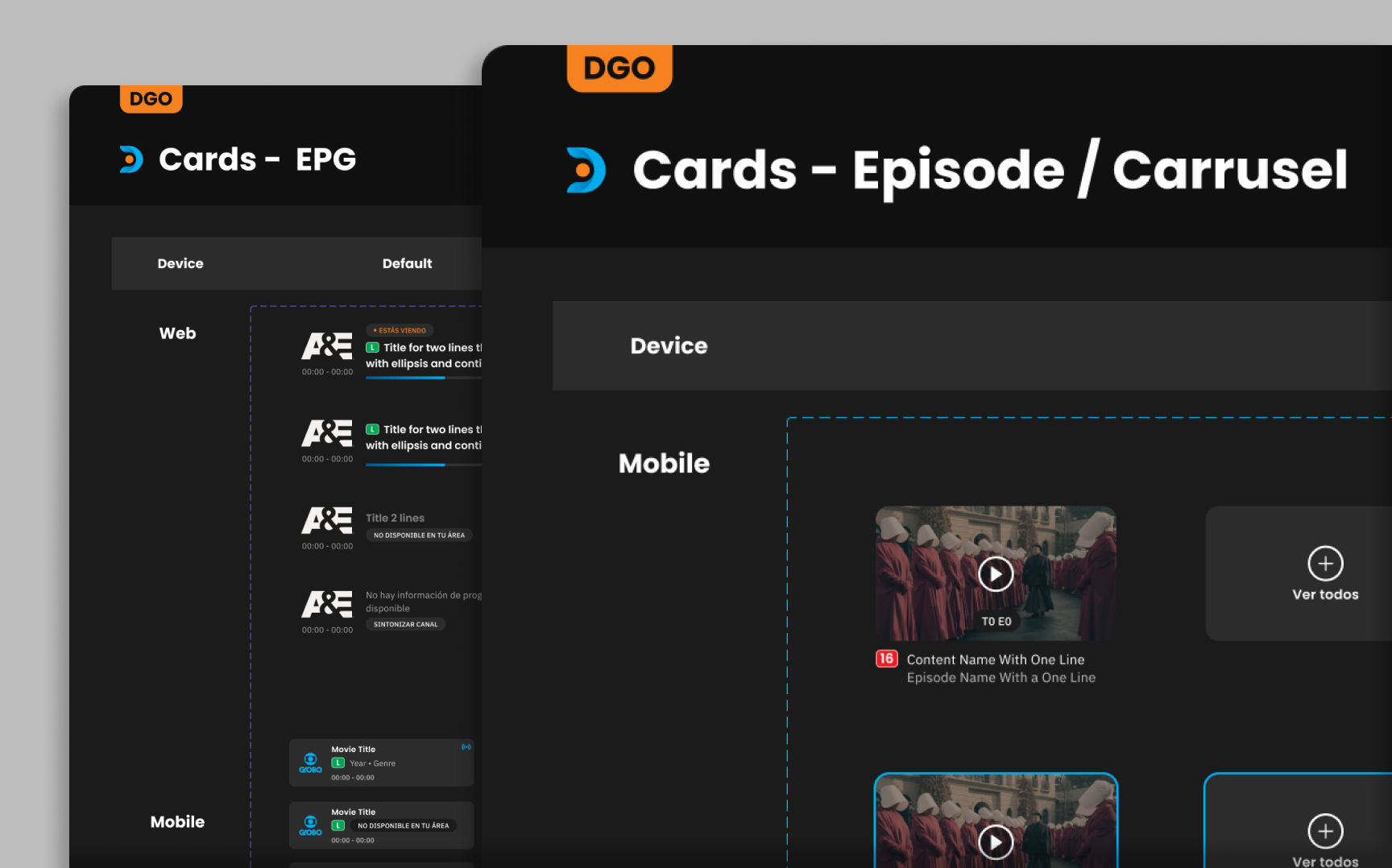
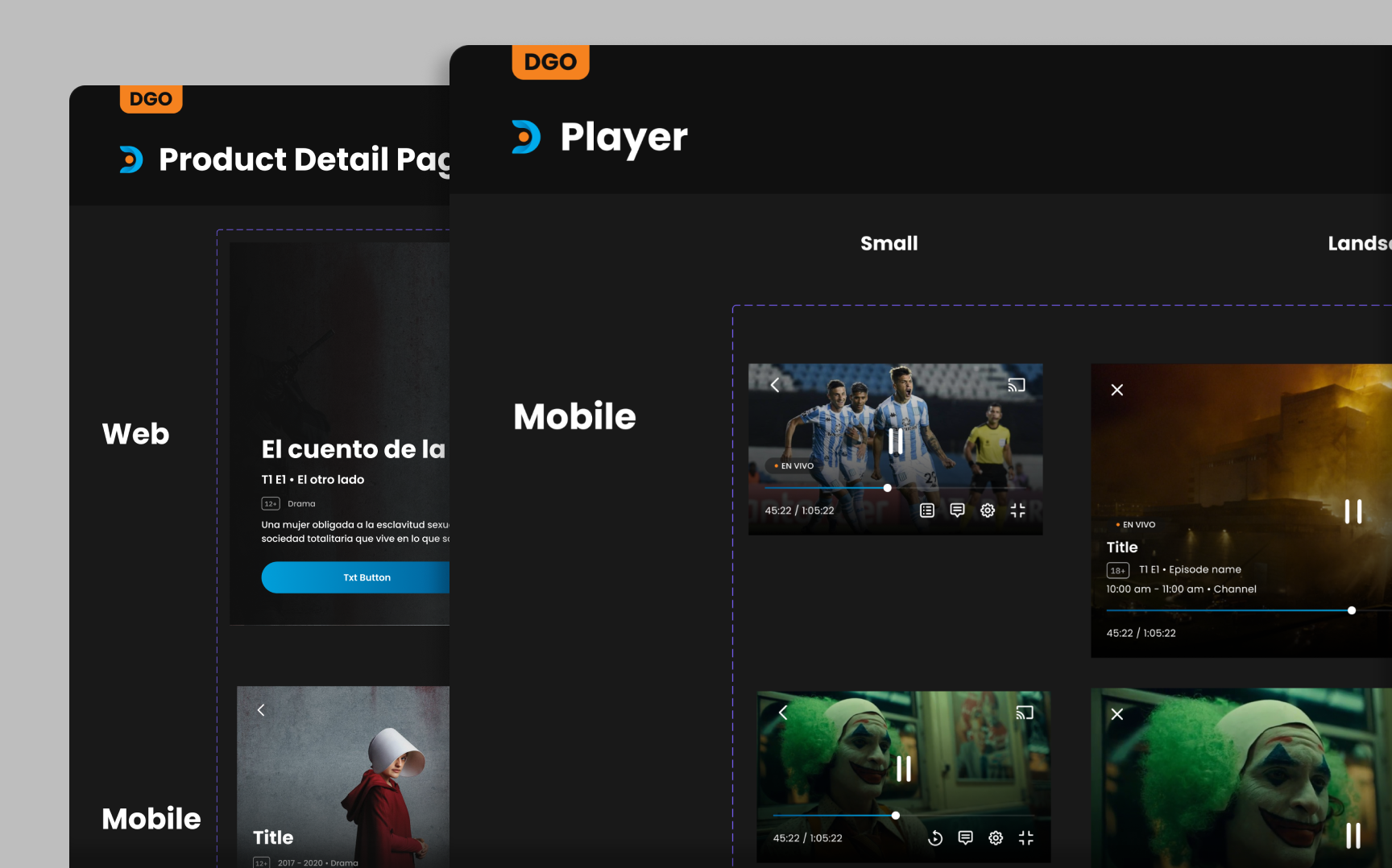
Built with the visual designers, addressing their needs directly: Foundations (color, iconography, fonts, logos), basic components (buttons, form elements, tooltips, labels, modals, toast messages), organisms (cards, header, footer), and templates (the player, the programming grid, the product detail page).
Without losing the traditional programming grid section, brought it into the player itself — now you can check what's playing on other channels while still watching what you tuned into, instead of losing your stream to go look.
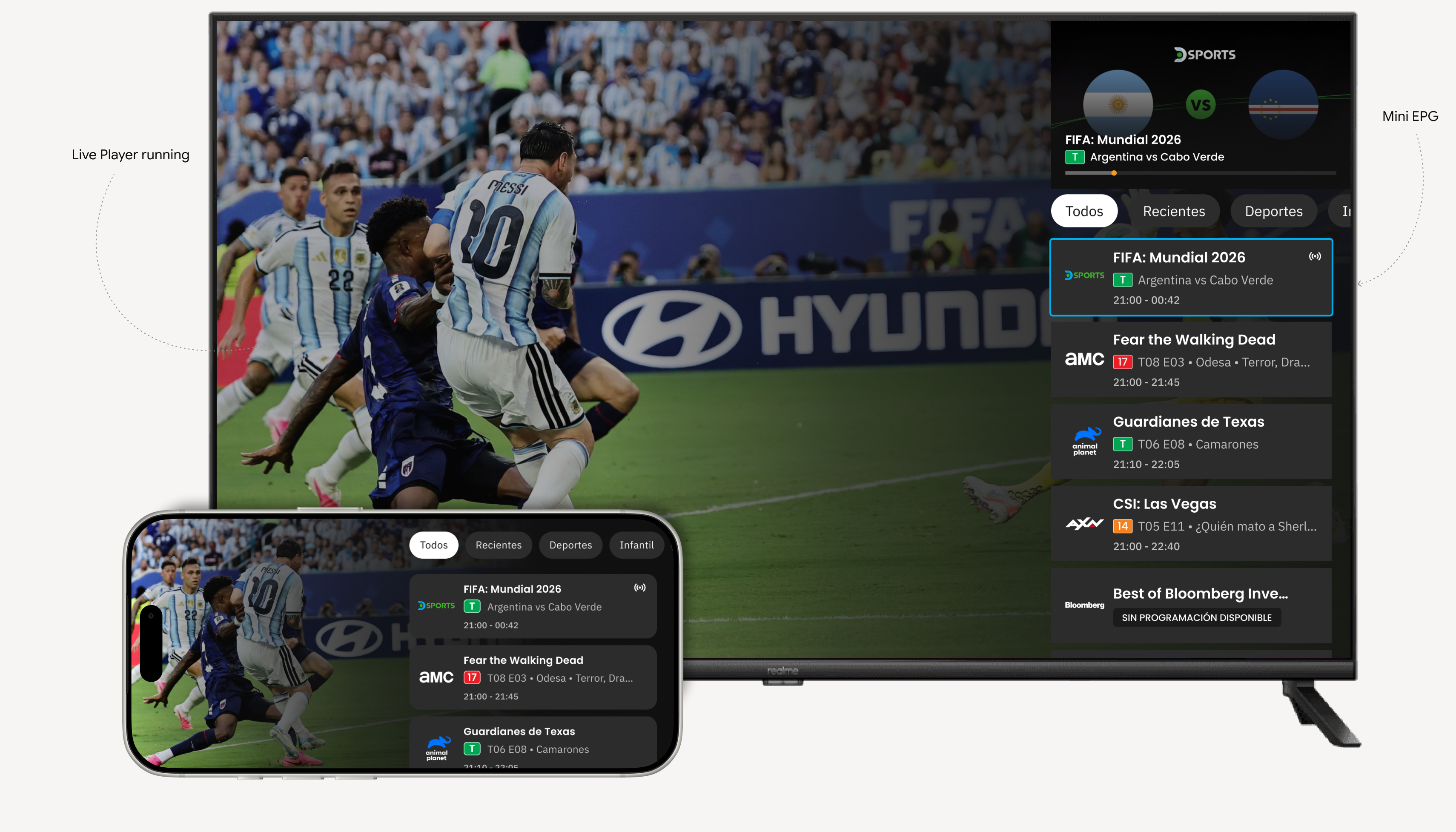
Since the database already stored up to 24 hours of past live content, I built a way to scroll the grid backward and watch what already aired. That naturally pushed the same grid forward too — browse upcoming content and schedule it, with a reminder through notifications.
Results
These figures are illustrative — modeled on the shape of the redesign rather than exact reported numbers — but they reflect what actually changed: three platforms stopped drifting apart, and live TV stopped punishing people for changing the channel.
Modeled on platform usage over the redesign period. Reverse EPG and scheduling didn't exist before this work, so their "before" is a true zero, not a rounding artifact.
The most durable outcome wasn't any single screen — it was the system underneath it. By the time I left, three platform teams were building on the same foundation, and DGO's signature feature finally worked the way live TV is supposed to: without punishing you for changing the channel.
Reflection
Aligning three designers before touching a single screen felt slow at the time — it would have been faster to just let each platform keep shipping its own version of "good enough." But every screen built after that alignment shipped faster and more consistently than anything before it, because nobody was reinventing a button or arguing about a shade of gray anymore.
What's still ahead: